10/11/2026
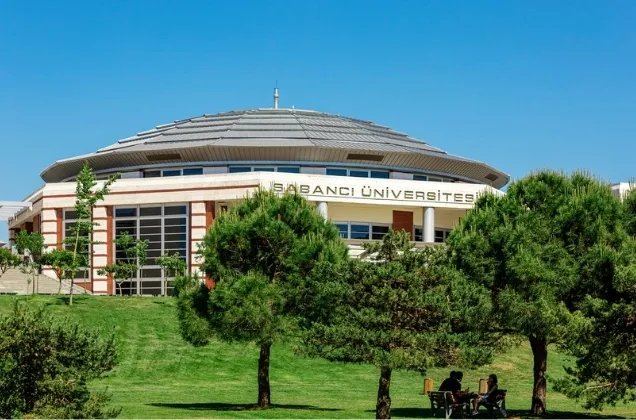
As part of COP31, taking place in Antalya from November 9 to 20, 2026, Sabancı University will host a panel focused on transforming waste into high-value-added materials and exploring innovative technologies that contribute to a circular economy.
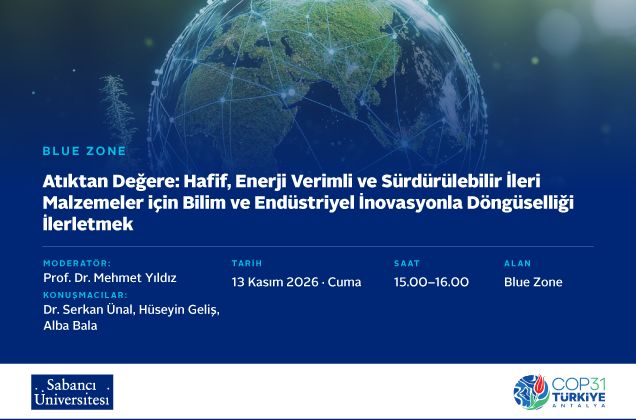
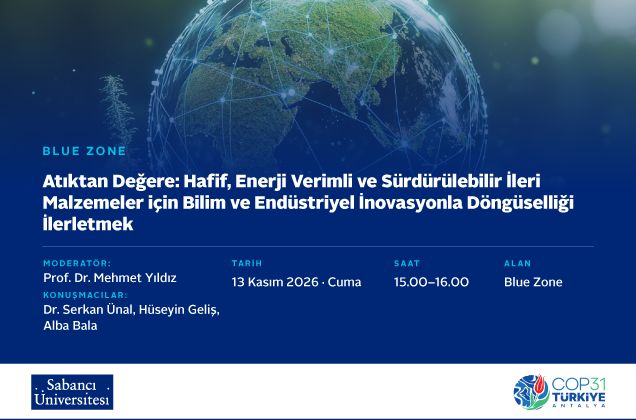
The panel, titled “From Waste to Value: Advancing Circularity through Science and Industrial Innovation for Lightweight, Energy-Efficient, and Sustainable Advanced Materials,” will be moderated by Prof. Dr. Mehmet Yıldız, Vice President for Research and Development at Sabancı University. It is scheduled to take place on Friday, November 13, 2026, from 15:00 to 16:00, within the Blue Zone of COP31.
Speakers at the panel will include Dr. Serkan Ünal, a faculty member in the Materials Science and Nanoengineering program at the Sabancı University Faculty of Engineering and Natural Sciences; Hüseyin Geliş, Chairman of the Board of Siemens Türkiye and an Independent Board Member at Sabancı Holding; and Alba Bala, Executive Director of the ESCI-UPF UNESCO Chair in Life Cycle and Climate Change.
The discussion will evaluate the potential of advancements in materials science and industrial innovation to convert industrial and agricultural waste into high-value-added materials. Key topics will include the recovery of polypropylene from end-of-life carpets, the production of graphene-based or graphene-like carbon materials from waste tires and fruit residues, and the application of these materials in lightweight hybrid composites. The potential of these materials, applicable across the transportation, construction, energy, and manufacturing sectors, to reduce the demand for primary raw materials and enhance energy efficiency will also be addressed.
The panel, which will explore the opportunities and challenges involved in translating scientific research into industrial applications, will focus on life cycle analysis, material performance, and economic feasibility. Furthermore, the role of collaborations between universities, industry, and public institutions in accelerating circular material innovation, as well as the contributions these efforts can make toward combating climate change, will be evaluated.